

Seminar for Finance and Banking PhD Candidates: Applying Machine Learning to Data Validation
On the morning of July 11, 2026, a seminar titled “Using Machine Learning for Data Validation” was held in Room B.001 at the University of Finance – Marketing’s campus at 778 Nguyen Kiem Street. The second seminar for PhD candidates in 2026, organized for faculty members of the School of Financial and Banking Technology and PhD candidates in Finance and Banking, was attended by unit leaders, academic supervisors, faculty members of the School of Financial and Banking Technology, and more than 60 PhD candidates from different cohorts.
The seminar aimed to provide guidance on techniques for detecting data anomalies, missing values, inconsistencies, and other data quality issues relevant to empirical research. These topics are particularly important in quantitative research in finance and banking, where data quality serves as a fundamental basis for ensuring the reliability of research models and findings.
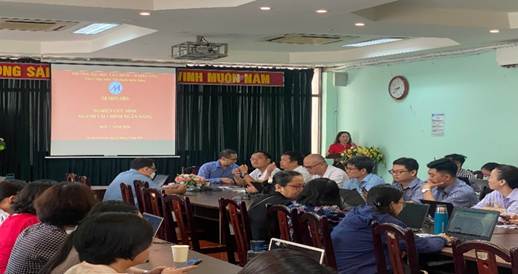
Figure 1: Assoc. Prof. Dr. Nguyen Thi My Linh delivering the opening remarks at the seminar.
In her opening remarks, Assoc. Prof. Dr. Nguyen Thi My Linh emphasized that the seminar was designed to provide a forum for exchanging experiences, sharing research findings, and discussing potential applications of Machine Learning in finance, banking, FinTech, and risk management. The event also aimed to contribute to improving the quality of scientific research and broadening the research knowledge and skills of PhD candidates.
Applying Machine Learning to Data Validation and Processing
During the seminar, MSc. and PhD candidate Mai Bao Ngoc, a lecturer at the School of Financial and Banking Technology, delivered a presentation titled “Applying Machine Learning to Data Validation and Processing.”
The presentation highlighted the fundamental role of data in empirical estimation models and emphasized that data quality is a critical determinant of the reliability of research findings. By applying machine learning techniques, researchers can detect anomalies, missing values, biases, and other data quality issues, thereby improving the efficiency and accuracy of data preprocessing before model estimation.
The presentation provided doctoral students with an opportunity to explore modern data processing techniques that can support their doctoral research and scientific publications. In particular, the speaker introduced the role of data preprocessing in reducing potential bias, improving accuracy, and enhancing model quality. Machine learning can support researchers in detecting anomalies, identifying missing observations, and addressing common data quality issues before a research model is constructed.
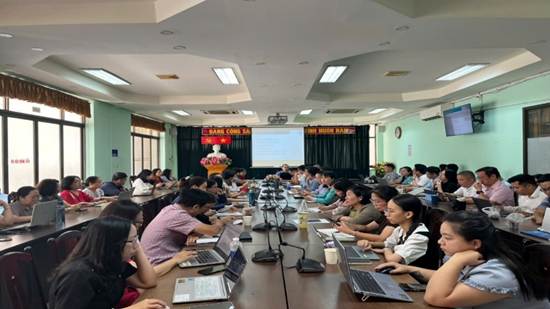
Figure 2: The speaker interacting with doctoral students during the seminar.
Lively and Practical Academic Exchange
During the discussion session, doctoral students raised numerous questions concerning common challenges in data collection and processing. These included methods for handling missing data, the feasibility of using multi-year datasets with missing observations, updating data to reflect changes in administrative boundaries, and addressing missing FDI data.
The discussion highlighted the importance of maintaining data currency, ensuring consistency across variables, and aligning datasets with the scope and objectives of the research. For multi-year datasets with missing observations, interpolation methods need to be applied carefully to avoid introducing bias or distorting research results. Data transformation techniques, such as using the form ln(Variable + 1), were also discussed as potential approaches for appropriate research contexts.
The seminar not only provided doctoral students with additional knowledge and practical research skills but also fostered academic exchange, experience sharing, and collaboration, thereby contributing to the advancement of scientific research in the fields of finance and banking.
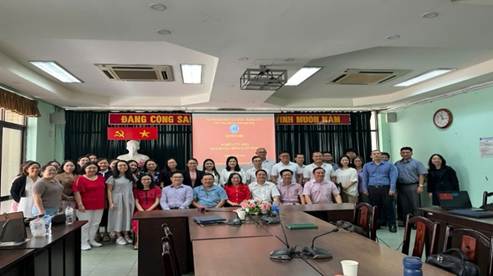
Figure 3: Leaders of the School of Financial and Banking Technology posing for a commemorative photo with doctoral students.
Through the regular organization of academic seminars, the School of Financial and Banking Technology reaffirms its commitment to postgraduate education, the enhancement of research capabilities, and the provision of academic support for doctoral candidates as they progressively develop high-quality scholarly research.
Nguyen Thi Thanh Chau, Tran Nhan Nghia
School of Financial and Banking Technology.