

Seminar: Developing Detailed Course Outlines Based on Learning Outcome Assessment
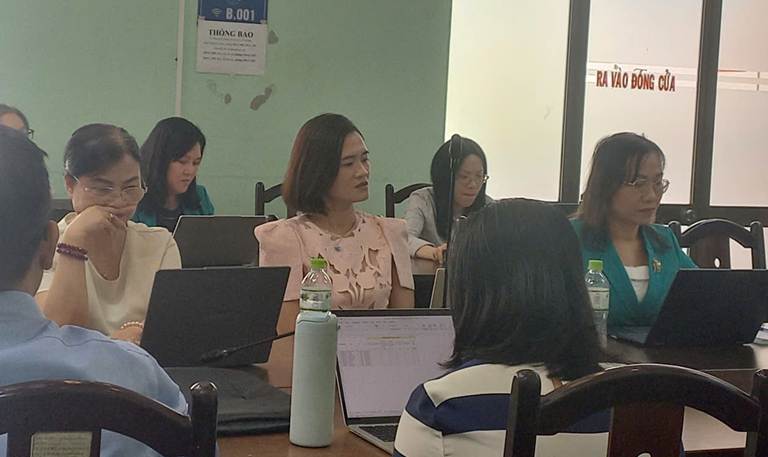
On Thursday, May 7, 2026, at Room B001, 778 Nguyen Kiem Street, Duc Nhuan, Ho Chi Minh City, the School of Financial and Banking Technology under the University of Finance - Marketing organized a professional seminar on the topic: "Developing detailed course outlines based on learning outcome assessment".
The program featured practical, effective, and relevant content and was organized to support curriculum innovation and ensure educational quality, with the following key objectives:
- Enhancing the capacity to develop detailed course outlines and measure program learning outcomes.
- Creating a forum for staff and lecturers to share, exchange, and discuss experiences.
- Building solidarity and strong relationships within School of Financial and Banking Technology.
The event was attended by the School’s leadership, Heads of Departments, and all lecturers and staff of the School of Financial and Banking Technology. The overall organization of the program was directed by Assoc. Prof. Dr. Nguyen Thi My Linh, Dean of School of Financial and Banking Technology.
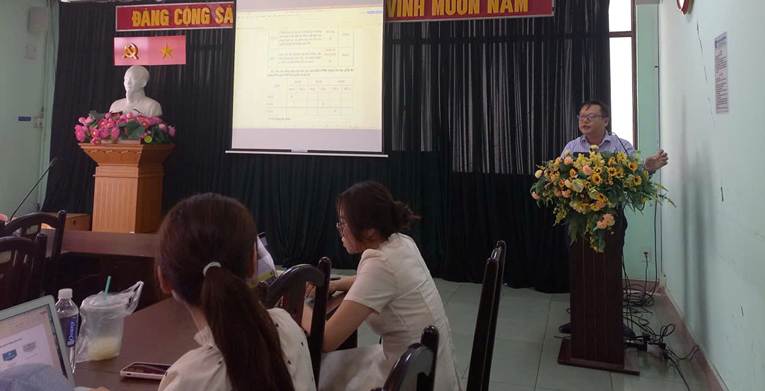
At the opening of the program, the School’s leadership delivered opening remarks and emphasized the urgent need to review, update, and standardize course outlines in the context of higher education increasingly focusing on learning outcomes, learner competencies, and training quality aligned with practical needs. At the same time, the seminar served as a professional activity to strengthen academic exchange, share experiences, and enhance the capacity of the teaching staff across School of Financial and Banking Technology in curriculum development.
Immediately afterwards, the seminar moved to its main content with two in-depth
presentations delivered by experts and lecturers from the School:
Presentation: “Developing detailed course outlines based on course learning outcome assessment” by Dr. Bui Ngoc Toan, Lecturer of the Department of Corporate Finance.
Presentation: “Developing an integrated matrix of course learning outcomes and measuring program learning outcomes” by Dr. Tran The Khang, Lecturer of the Department of Public Finance.
The seminar took place in a lively atmosphere, with lecturers from various departments actively exchanging and discussing difficulties and challenges in developing course outlines, selecting assessment methods, and implementing learning outcome measurement in actual teaching. The contributions helped clarify a number of important professional issues while also creating consensus on the implementation orientation within School of Financial and Banking Technology.
Compared with the previous version, the 2026 course outline demonstrates a clear shift
toward an Outcome-Based Education (OBE) model with three core improvements: (1)
Streamlining the CLO structure: From five separate learning outcomes, the
framework has been consolidated into three key CLOs (Knowledge, Skills, and
Autonomy & Responsibility), making the design of teaching-learning activities
and measurement more coherent while avoiding overlap in assessment content. (2)
Updating content in line with modern trends and accurately reflecting current
and contemporary issues. (3) A transparent and balanced assessment matrix: The new course outline allocates overall weights among CLOs while separately
assessing skills to ensure that students not only "know the theory" but also "can calculate and make decisions." Linking each specific assessment format (attendance, assignments, group reports, multiple-choice/essay tests) with PI and PLO helps minimize subjectivity and increase the reliability of learning outcome measurement. Overall, the 2026 course outline addresses the previous version’s excessive emphasis on theory, creates a balance between foundational knowledge, practical skills, and learner qualities, and provides a solid foundation for the accreditation and quality assurance of a standardized training program.
The seminar brought many practical benefits, contributing to lecturers’ awareness and professional capacity in developing, reviewing, and completing course outlines based on a learning-outcome-oriented approach. At the same time, the program demonstrated School of Financial and Banking Technology’s determination to continuously improve training quality, respond to the requirements of higher education innovation, and meet society’s increasingly high demand for high-quality human resources in the Finance – Banking sector.
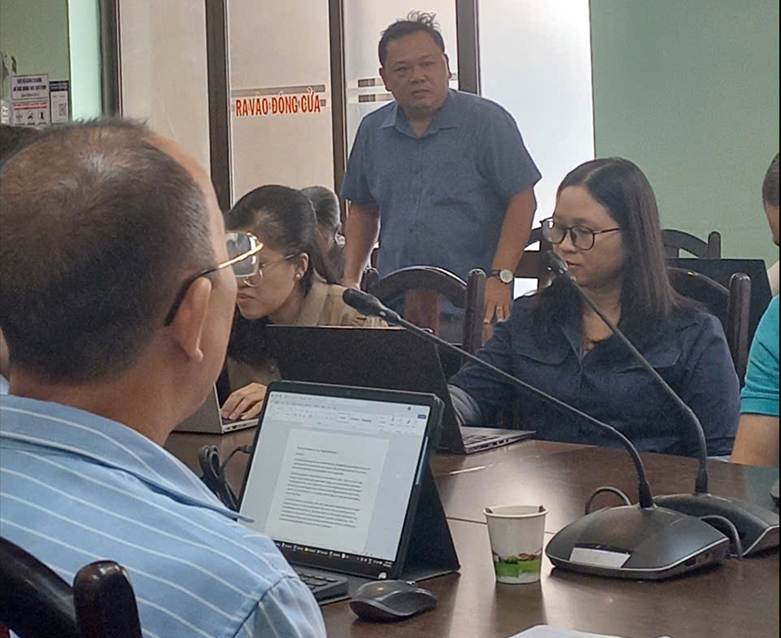
After more than two hours of lively discussion, the seminar officially concluded successfully with the closing remarks by the School’s leadership, opening up various directions and standardized approaches for curriculum development in the coming period.
Nguyen Bang Phi, Chu Thi Thanh Trang
School of Financial and Banking Technology.